Quick Summary & Key Takeaways
- Insightful Resource: A detailed guide exploring Find Your Michigan Otis Offender Registry Your Guide Now in depth.
- Step-by-Step Walkthrough: Detailed sections covering practical applications and common practices.
- High-Value Content: Curated layouts designed to provide maximum clarity and structured learning.
In an era demanding transparency and access to information for public safety, understanding the mechanisms by which states track and disseminate data on individuals with criminal histories becomes paramount. Michigan's Offender Tracking Information System, commonly known as OTIS, serves as a critical resource in this landscape, providing a searchable database that aids both law enforcement and the general public. This article delves into the functionalities, scope, and implications of the Michigan OTIS offender registry, offering a detailed guide to its utility and limitations.
Editor's Note: Published on October 26, 2023. This article explores the facts and social context surrounding "michigan otis offender registry your guide".
Understanding the Foundation
The Michigan Offender Tracking Information System (OTIS) is an online database maintained by the Michigan Department of Corrections (MDOC). Its primary purpose is to provide public access to information about offenders who are currently, or have been, under the jurisdiction of the MDOC. This includes individuals incarcerated, on parole, or probation. Unlike some state registries that focus exclusively on sex offenders, OTIS encompasses a broader spectrum of individuals, offering a more comprehensive view of Michigan's correctional population.
The creation and maintenance of such a system are rooted in legislative mandates aimed at balancing public access to information with individual privacy rights. The information available through OTIS is compiled from various official sources within the correctional system, ensuring its accuracy and up-to-dateness as much as possible. It serves as a vital tool for community members seeking to verify information about individuals in their neighborhoods, for employers conducting background checks, and for researchers studying criminal justice trends within the state.
- •Kelly Lebrock A Comprehensive Look At Her Life Career And Legacy
- •Does Barron Trump Sing And Play Guitar Exploring The Life Of Donald Trumps Son
- •Unveiling The Wealth Of Jason Crutchfield A Comprehensive Look At His Net Worth
- •An Indepth Look At Melanie Griffiths Life And Career
- •The Unseen Forces Behind Jakerman's Rise To Power: A Deep Dive.
"Public access to offender information, when managed responsibly, is a cornerstone of community safety. Systems like OTIS empower citizens with the knowledge needed to make informed decisions, fostering a more vigilant and secure environment." A prominent criminal justice advocate.
Access and Public Information Parameters
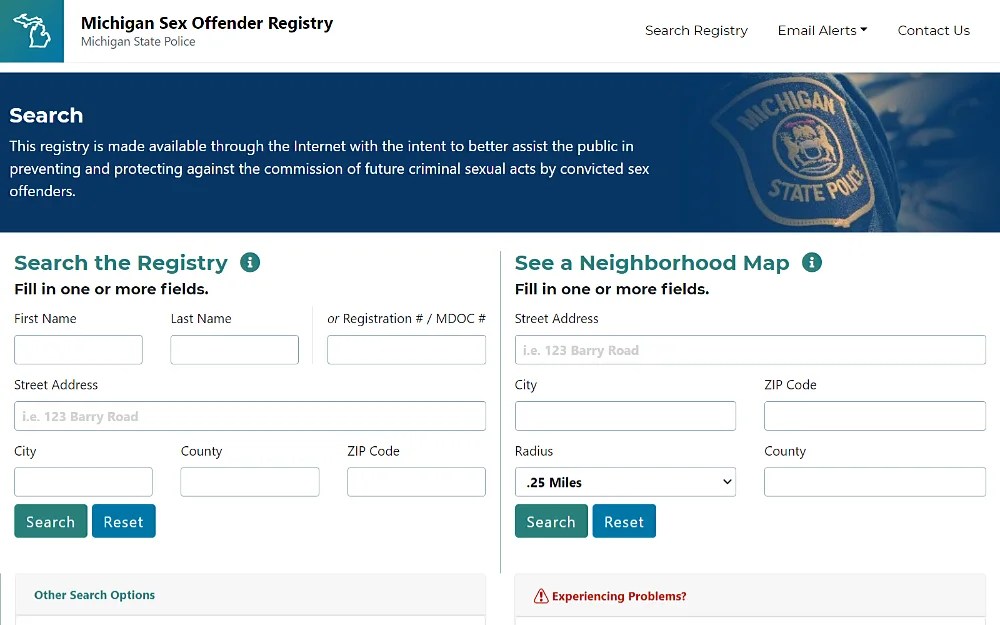
Accessing the Michigan OTIS offender registry is designed to be straightforward for the general public, typically requiring only an internet connection. The system allows users to search by an offender's name, MDOC ID number, or demographic information. Once a match is found, the system presents a profile that can include an offender's photograph, physical descriptors, details of current and past offenses, sentence information, parole status, and the facility or unit to which they are assigned. It is crucial to distinguish between what OTIS provides and what it does not. OTIS is a record of MDOC supervision; it does not track all criminal records, nor does it necessarily include individuals whose offenses did not result in MDOC jurisdiction, such as misdemeanors handled solely at the county level without probation from the state.
The parameters of public information are carefully delineated by state law. While a significant amount of data is made available to promote public safety, certain sensitive information, such as victim details or confidential personal identifying information beyond what is necessary for identification, is explicitly excluded. The system's design aims to facilitate legitimate public safety inquiries without infringing on the broader privacy rights of individuals or victims. Understanding these boundaries is key to properly interpreting the information found within the registry.
To explore further academic studies and guidelines, refer to search results on Official Academic & Government Portals.