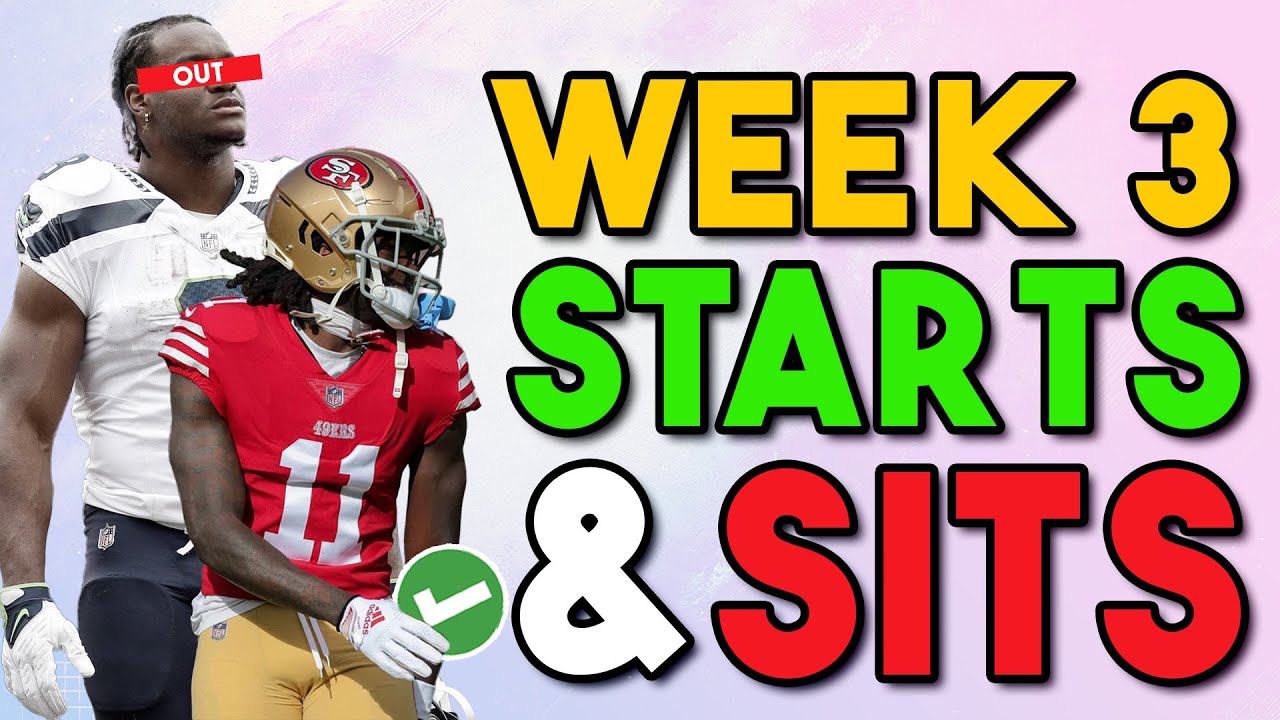
Quick Summary & Key Takeaways
- Insightful Resource: A detailed guide exploring Week 3 Start/sit: Who To Play, Who To Bench! 2024 in depth.
- Step-by-Step Walkthrough: Detailed sections covering practical applications and common practices.
- High-Value Content: Curated layouts designed to provide maximum clarity and structured learning.
Exploring Week 3 Start/sit: Who To Play, Who To Bench! can provide valuable insights. In this article, we look at the key concepts of Week 3 Start/sit: Who To Play, Who To Bench! and how it impacts various aspects.
Useful Tips and Tricks for Week 3 Start/sit: Who To Play, Who To Bench!
Year: Use year to refer to the year, and the number of years can be abbreviated to yr, or y when there is no ambiguity; month: month, the abbreviation can be: m; day: day; the abbreviation can be: d; hour: hour; the abbreviation can be: hr or h; minute: minute; the abbreviation can be: min; . Analysis: In the above example sentence, on also appears with the trip, so on the next week appears in the sentence at the same time. It may appear by chance, but it is by no means a solid. Although there is only one word difference between A week and one week in language expression, they are different in emphasis and contextual application. The expression a week focuses more on the length of time and emphasizes the concept of "a week". It is usually used for drawing.
Why Week 3 Start/sit: Who To Play, Who To Bench! Matters
Example: On the trip next week, I have made a meticulous plan.
Frequently Asked Questions about Week 3 Start/sit: Who To Play, Who To Bench!
What is the primary benefit of Week 3 Start/sit: Who To Play, Who To Bench!?
The primary benefit of Week 3 Start/sit: Who To Play, Who To Bench! is that it provides a structured approach to solving common challenges in this niche. It saves time and helps organize important ideas.
Where can I find more examples of Week 3 Start/sit: Who To Play, Who To Bench!?
You can find more examples of Week 3 Start/sit: Who To Play, Who To Bench! in specialized blogs, design templates, reference manuals, and academic journals.
For more details and authoritative references, refer to the official documentation on Wikipedia.